
Gantry robots
Hanter’s gantry robot concept is a cost-effective and flexible material handling system for automatic goods handling.
Common sorting technologies
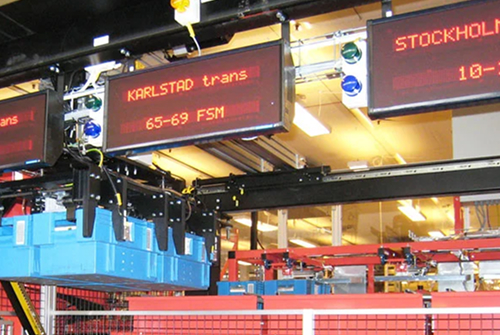
Automatic tray unloader (ALO)
The ALO automatic tray unloader is a robotic unloading system that provides ergonomic, efficient and cost-saving unloading of mail trays.
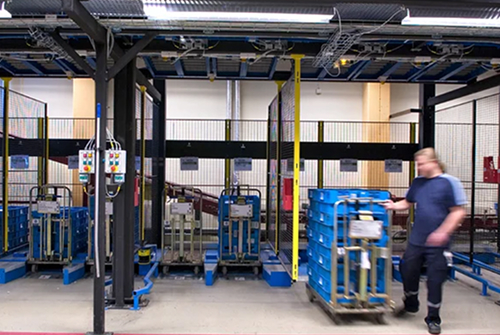
Automatic tray loader (ALA)
The ALA tray loader is a robotic loading system that provides ergonomic, efficient and cost-saving sorting and loading of mail trays.
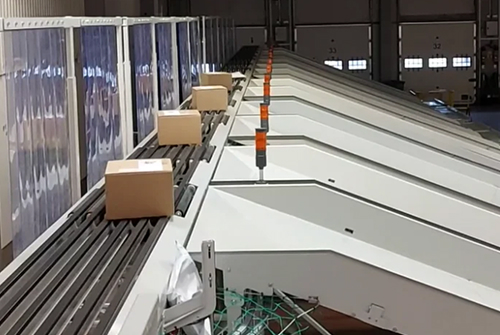
Light goods conveyors (LTP)
Hanter’s conveyors and conveyor systems for light goods are designed to handle boxes, parcels, cartons, pallets, trays and more.
5 reasons to invest in a new gantry robot
Investing in a new gantry robot is an effective way to automate and streamline material handling in production. It increases capacity, improves precision and reduces the need for manual handling.

Increased productivity and shorter cycle times
Higher quality and repeatable precision
A better working environment and improved safety
Flexible, future-proof automation
Lower staffing costs and better use of resources
Gantry robots for automatic goods handling
Hanter’s gantry robot concept is a cost-effective and flexible material handling system for automatic goods handling.
The gantry robot concept is used in material handling for palletising, loading and unloading boxes and machine tending, among other things, as well as for stacking materials in industry.
Our in-house robot profile gives us the flexibility to solve most internal logistics challenges across a range of industries. The gripper is adapted to the product being handled, and the robot is adapted to your needs and requirements.
Hanter’s turnkey gantry robot solutions often include various types of conveyors, such as roller conveyors, belt conveyors, chain conveyors, modular belt conveyors, vertical conveyors and pallet magazines.

A spare parts package kept on site shortens lead times and reduces the risk of operational disruptions. It also means less time from your first call to a technician being on site to resolve the issue. Contact us for advice!
Free consultation
Get in touch and we will analyse your flow, calculate capacity and put together a proposal — free of charge.
Marketing Manager
Tommie Settergren

















Frequently asked questions
To make things easier, we have gathered the answers to the most common questions in one place. Whether you want to know more about our services, deliveries or how to reach us, we hope you will find the answer here. Still can’t find what you are looking for?
What is a gantry robot?
A gantry robot is an automated handling system that uses an overhead or gantry structure to move, sort, pick or position goods.
How does the gantry robot work?
A gantry robot is an automated material handling system in which the robot moves within a fixed gantry above the working area. It operates along linear axes (X, Y and Z) and can therefore reach every position within its working area with high precision.
The robot’s movements are governed by a programmable control system, and it is fitted with a purpose-built gripper to handle different types of goods.
The gantry robot is used primarily for palletising, loading, unloading and other internal logistics tasks that require efficient, repeatable goods handling.
What types of goods can the gantry robot handle?
A gantry robot can handle many different types of goods, particularly in industry and logistics. Typical examples include cartons, boxes, sacks, crates and other packaged products. It can also be adapted to lift and move palletised goods or loose items, depending on the gripper used — a vacuum gripper or a mechanical claw, for instance. Thanks to this flexibility, gantry robots are often used for efficient handling of both light and medium-heavy goods in automated flows such as packing, palletising and internal transport.
Can the gantry robot operate around the clock?
Yes — a gantry robot can run continuously around the clock, provided it is correctly installed and maintained. Because it is automated, it can perform repetitive operations without interruption, which makes it suitable for unmanned operation in industrial environments.
Regular maintenance and inspection are still required to ensure reliability and avoid downtime.